DESTINATION 2
Seoul, But Make it Personal
I moved there at eighteen, but the love story began a year earlier, during a trip that was meant to be a graduation gift. I remember landing in Seoul and feeling something I couldn’t quite name at the time, curiosity, comfort, maybe even a strange sense of belonging. I thought I’d stay for a few years. I ended up staying six.
Ten years later, I’m no longer living in Korea, but I still carry the city with me. Its energy, its quiet corners, its way of being both fast and thoughtful, futuristic and deeply rooted. I’ve seen it change, new cafés, new trends, new neighbourhoods, but that creative pulse, that attention to detail, is still there. Stronger than ever, maybe.

Neighbourhoods: A Personal Map
One of the first things to understand about Seoul is how the city is structured. It’s divided into “gu” (districts), which are further split into “dong” (neighbourhoods). Some are sprawling and chaotic, others feel like quiet little enclaves tucked away within the city’s vast sprawl. What makes Seoul so fascinating is this contrast, hyper-modernity on one side of the river, quiet traditional pockets on the other. Even after living there for years, I still find new corners that surprise me.
When I first moved to Seoul in 2014, I instinctively settled in Gangnam. I stayed there the entire six years and for the longest time, I wouldn’t even consider living anywhere else. Looking back, that was probably a bit silly, but there was something about the pace, the clean lines, and the energy that made me feel at home.


Hannam
I’ll be honest, I didn’t use to like Hannam. A decade ago, it felt too quiet, maybe even a little dull. But that changed. Fast forward to today, and it’s one of the prettiest and most curated areas in the city. The streets are calmer than Gangnam’s, the vibe is more local, and everything feels a little more thoughtful.
This is where you’ll find the Lemaire showroom, tucked inside a peaceful two-storey home with a garden. It’s elegant and understated in the best way. And then there’s Euphoria, one of my favourite cafés in the area, and Mas, another great spot that feels just right for a quiet coffee. Hannam is a place that’s grown on me slowly, and now it’s a must every time I’m in Seoul.
Seongsu
Seongsu is what people like to call Seoul’s “Brooklyn”, an industrial area turned creative hub. I remember when it first started to change, maybe six or seven years ago. There were whispers about this café or that pop-up. Now, it’s exploded into one of the trendiest areas in the city. You’ll find everything here, from fashion to food, and every space feels wildly unique. Luxury brands have caught on too. Dior has a breathtaking store here that I wasn’t expecting to love so much. But what I really come for are the cafés, Café Onion is still my favourite, and for good reason. Yes, it’s crowded. Yes, it’s everywhere on Instagram. But the vibe, the space, the pastries, it still works. Seongsu is hectic these days, but the creative energy is undeniable.


Mangwon
Mangwon wasn’t even on my radar when I lived in Seoul. I stayed in my Gangnam bubble and barely looked elsewhere. But during my most recent visits, I gave it a proper chance, and I’m so glad I did. It’s a quieter, more laid-back part of the city. Less polished than Seongsu, but full of charm. The buildings are lower, the streets narrower, and there’s this feeling that people actually live here. Not everything is curated to perfection and that’s what makes it so refreshing. There are great cafés, independent shops, and this slightly slower rhythm that’s hard to resist.
Samcheong-dong
If I ever needed to breathe, I went to Samcheong-dong. Tucked between the palaces of Gyeongbokgung and Changdeokgung, this traditional area of Seoul always felt like stepping into another time. The architecture, the small streets, the low rooftops, everything invites you to slow down. I still go back every time I visit. It’s the kind of place that grounds you. You’ll find art galleries, hanok houses, quiet coffee shops, and spots with tiny gardens tucked away. Yes, it’s become more popular, and you’ll see big brands now (Tamburins, Café Onion, etc.), but if you wander a bit, you’ll still find hidden gems that feel personal and untouched.


Food, Street Eats & Coffee Culture
Let’s start with the obvious: the food in Seoul is amazing. And not just the trendy restaurants or the Michelin-star spots, I mean the everyday, the unexpected, the back-alley bites that somehow become your favourite meal of the trip. Korean cuisine is incredibly rich, layered, spicy, and comforting. There’s a depth to it that you don’t always expect, especially when you start with something as simple as a bowl of bibimbap or kimchi fried rice, which, by the way, never disappoints.
Personally, I was always drawn to the classics. Tteokbokki (spicy rice cakes), kimbap (think of it as the Korean version of sushi rolls, but very different in flavour), sizzling bulgogi or samgyeopsal for BBQ, crispy pajeon on rainy days, the list goes on. Korean BBQ, in particular, is more than a meal. It’s a ritual, a social moment, a DIY feast where the table becomes the kitchen. And it's everywhere, from high-end barbecue houses in Gangnam to tiny grill-it-yourself places in more residential neighbourhoods.
If you’re looking for the best food in Seoul, don’t overlook the stalls. My favourite place for street food is Namdaemun Market, specifically the food street tucked inside the market. It’s loud, chaotic, and a little overwhelming, but that’s part of the charm. You’ll find steaming dumplings, spicy noodles, fried pancakes, fish cakes on sticks (eomuk), and so many other things that I still can’t name but absolutely loved eating. Some of the stalls have been there forever and are famous among locals, I’d always follow the queues.
You can also get great quick meals at local diners (shikdang), often run by older ladies who cook everything from scratch and serve you a tray of small dishes (banchan) alongside your main. These spots are cheap, fast, and usually delicious.
At the other end of the spectrum, there’s a huge wave of modern, fusion, and international restaurants, especially in Gangnam, Itaewon, and Samcheong-dong.

Ongozisin
101 Gwanak‑ro 14‑gil, Bongcheon‑dong, Gwanak‑gu, Seoul
Maha (Hannam)
85 Seobinggo‑ro 91‑na‑gil, Yongsan‑gu, Seoul
On Ground Gallery
23 Jahamun-ro 10-gil, Jongno District, Seoul
1 in
534 Yeonseo-ro, Jingwan-dong, Eunpyeong District, Seoul
Café Onion
8 Achasan-ro 9-gil, Seongdong-gu, Seoul
Uig
7 Mangwon-ro 3-gil, Mapo-gu, Seoul
Vonzrr
13 Gwangnaru-ro 4ga-gil, Seongdong-gu, Seoul
Alver Coffee
34 Gangnam-daero 102-gil, Gangnam District, Seoul
Anthracite Coffee Seogyo
11 World Cup-ro 12-gil, Mapo-gu, Seoul
The café culture
Korea doesn’t do cafés like anyone else. They’re not just about coffee, they’re about the experience. A place to escape, to take photos, to read, to meet someone, or to sit in silence for hours. You’ll find everything from themed cafés with insane interiors to minimalist, light-filled havens that look like something out of an architecture magazine.
I used to go café-hopping like it was a sport. And over the years, I developed a few strong opinions:
First, the coffee is generally very good, but always double-check before ordering anything too sweet (a lot of drinks come with syrup or added sugar by default).
Second, desserts in Korea are hit or miss. I’ve had some that were incredible, and others that tasted like air or were so sugary I gave up halfway.
My favourite cafés are usually the quiet ones. Minimalist, clean, with big windows and natural light. Mangwon has some of the best, small, cosy spots that feel local and creative. Seongsu is another favourite for more experimental places, but it can get crowded. Hannam has very curated, design-led cafés that feel almost like mini showrooms, while Garosu-gil has some great classics that are more lively and social.
And don't worry if you're not a coffee drinker, most places have tea, ades, or alternative drinks like yuzu honey teas or even grain lattes (which I never fully got used to, but people love them).

Korean brands, concept stores, and a masterclass in retail design
Over the years I’ve grown to really appreciate Korean fashion, especially the minimalist brands with sharp tailoring, neutral tones, and really great quality. Labels like Nothing Written, Replain, and Recto are some of my favourites. A lot of them are stocked online at W Concept, but if you can, it’s worth visiting their physical stores. The materials, the fit, the calm palette, everything feels thoughtful without being over-designed. You’ll find great showrooms scattered around Hannam, Sinsa, and Apgujeong, often tucked into quiet streets or inside beautiful houses. These are the places where I prefer to shop, the ones that feel a bit more local, a bit more curated.
Boon the Shop was one of the first multi-brand luxury stores I ever visited in Seoul and still feels just as inspiring every time I go. The space itself is stunning, and the curation blends international designers with Korean labels and a few unexpected pieces across fashion, beauty and objects. Musinsa, on the other hand, is much younger and more casual, but they’ve built something really smart, a mix of affordable fashion and niche streetwear brands with very cool store design. Their flagship is big, bold, and full of energy. It’s fun to explore.

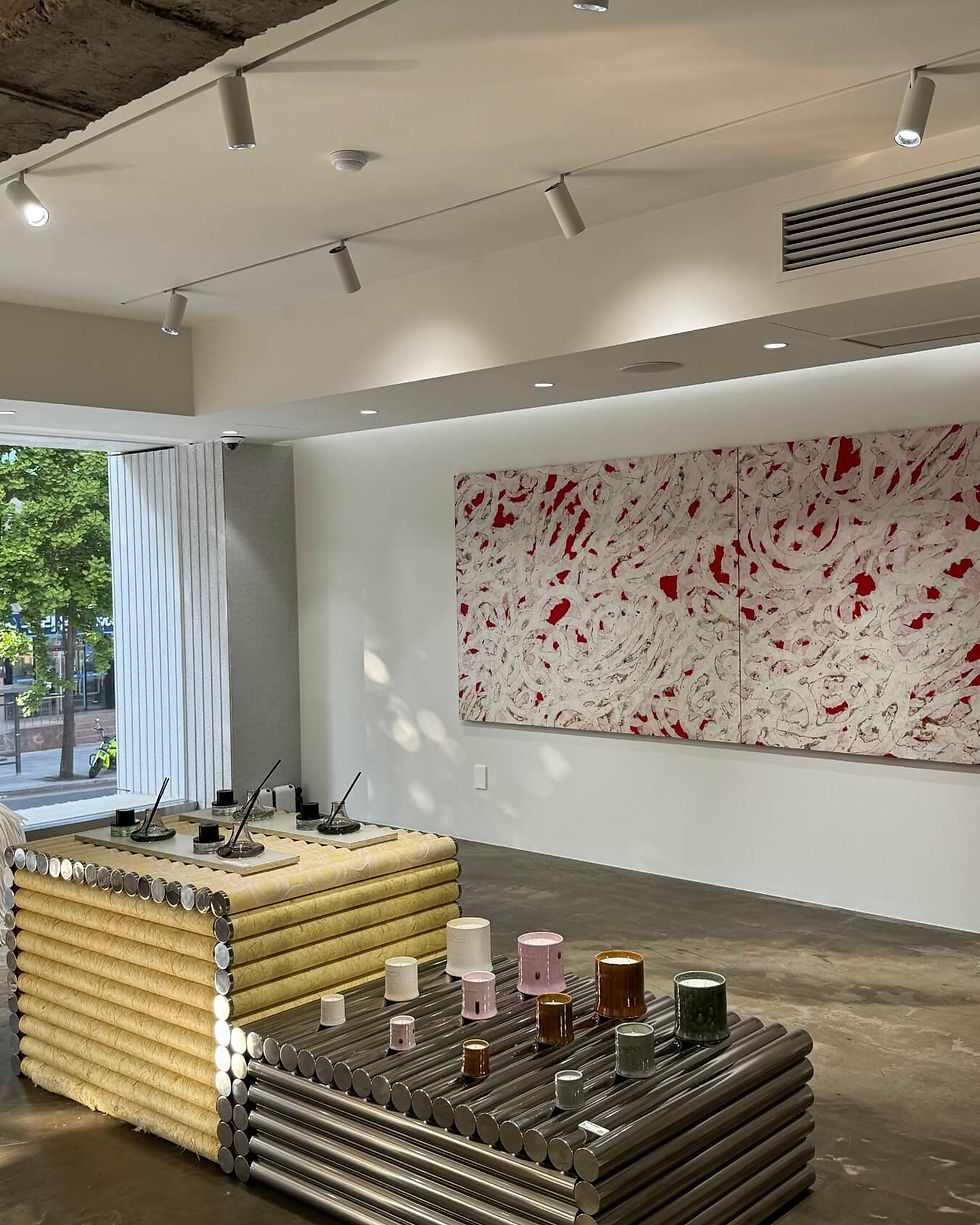
Korean beauty is a world in itself. It’s known globally for a reason, the quality is high, the packaging is chic, and the innovation never stops. Tamburins is probably my favourite brand, mostly because of the experience of visiting their shops. The interiors are always beautifully done, soft lights, sculptural shapes, art installations and the scents are unique and memorable. I also love Hince, La Ka, and Amuse, which all combine clean branding with good products and genuinely great spaces
If you’re into interior design and furniture, Seoul has some great showrooms too, from contemporary Korean brands to vintage shops with a curated European feel. Areas like Hannam, Seongsu, and Yeonhui-dong are where I’ve found some of the most unexpected spots. It’s not just about what they sell, but how they make you feel inside the space.
Personally, I’m not a big fan of huge department stores. You’ll find all the international brands at Shinsegae or Hyundai, but I prefer walking around the streets of Gangnam or Hannam and stepping into smaller, independent shops. That’s where you really feel Seoul’s energy, creative, layered, detail-obsessed, but still accessible.
.
